BONES
GENERATIVE ARTWORK / REAL-TIME VISUAL
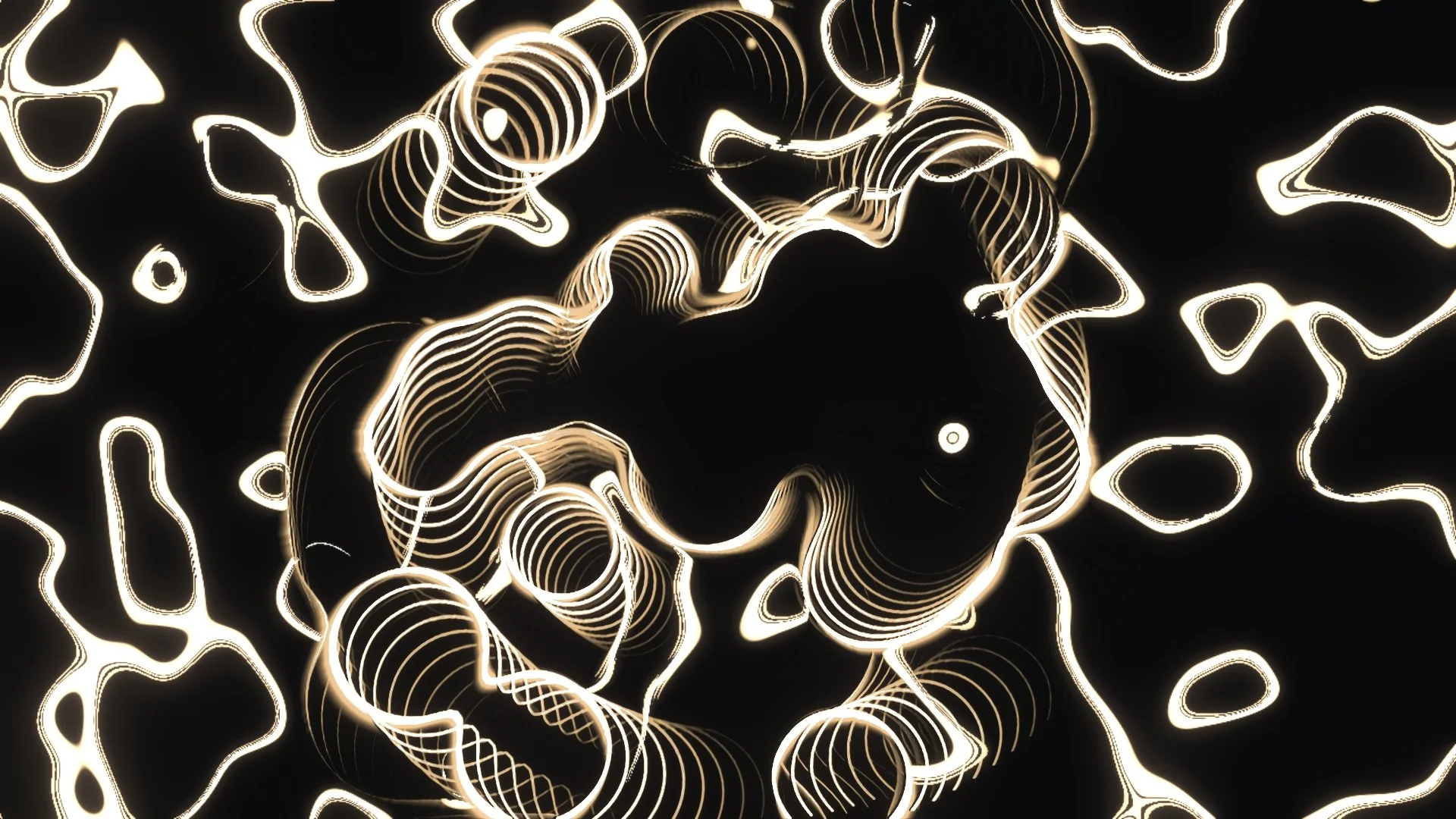
Bones starts with a question: What would a bone look like if we could observe its internal structure? The piece approaches bone from the inside out, translating its porous, layered structure into an abstract generative form.
Project Contribution
01
REAL-TIME SYSTEM DESIGN IN TOUCHDESIGNER
02
NOISE-BASED FORM GENERATION
03
EDGE DETECTION AND FEEDBACK DESIGN
04
CONCEPT DEVELOPMENT AND VISUAL DIRECTION
Bones is part of The Body as an Ecosystem, a series of real-time works exploring the body as a living system, alongside Neuron and Veins.
What is this?
Bone structure varies across the body and changes with factors such as age, health, and physical activity. What might these differences look like if we could see beneath the surface? What patterns emerge when we move away from the familiar shape of a bone and focus on its internal architecture?
Design Approach
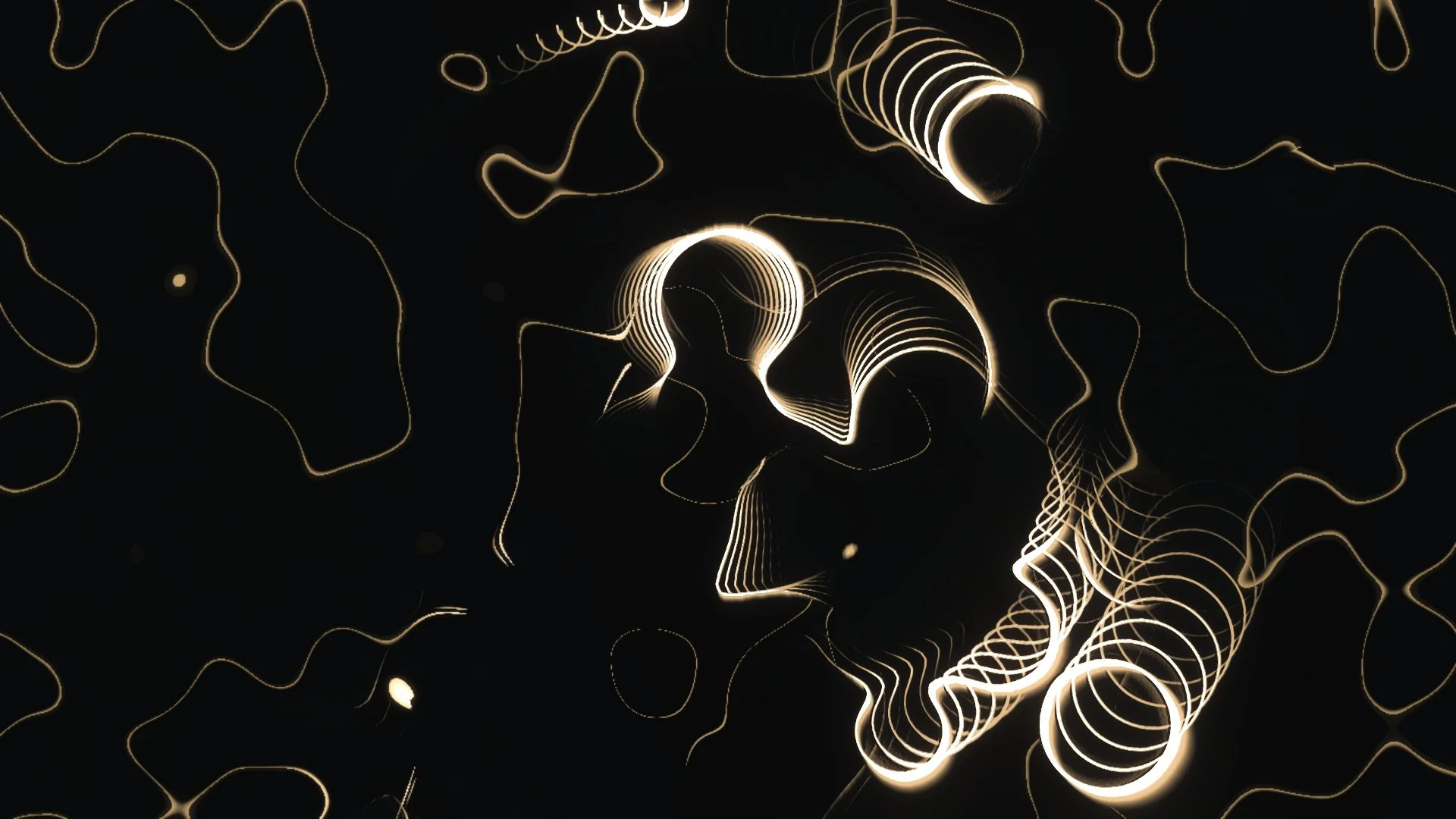
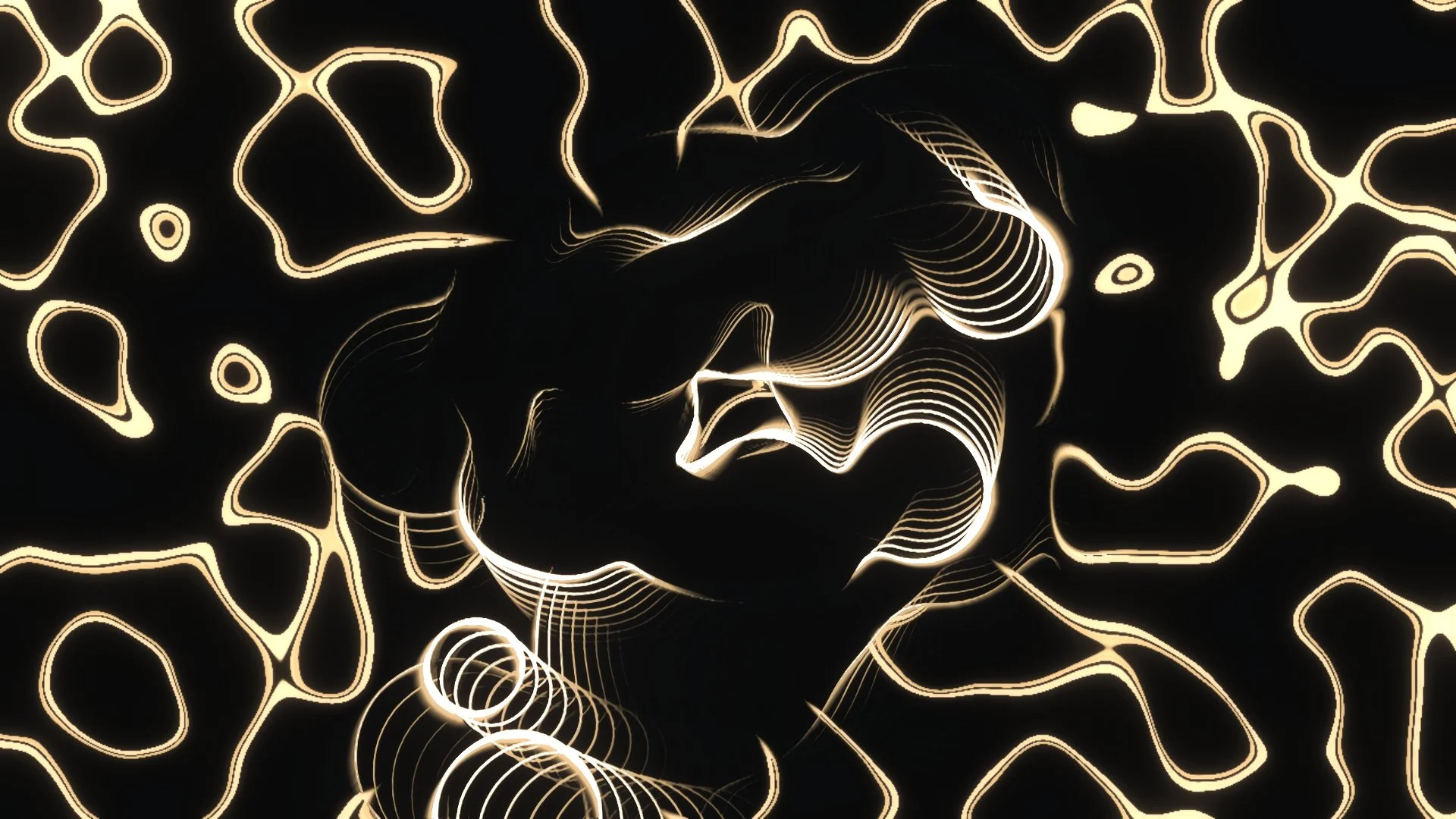
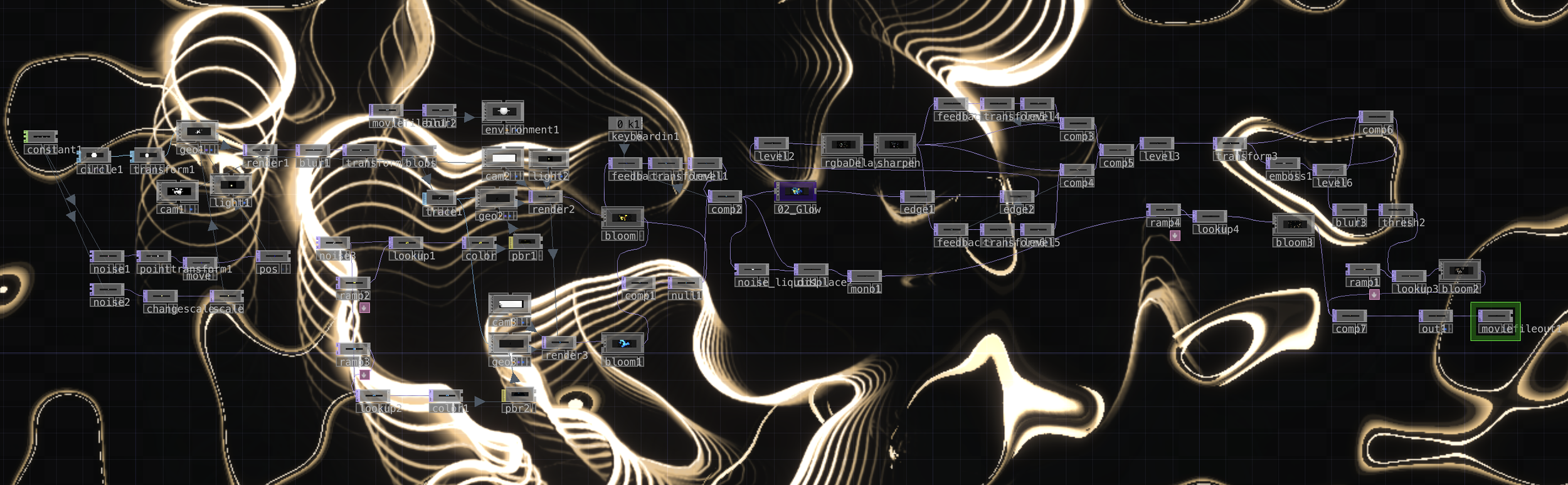
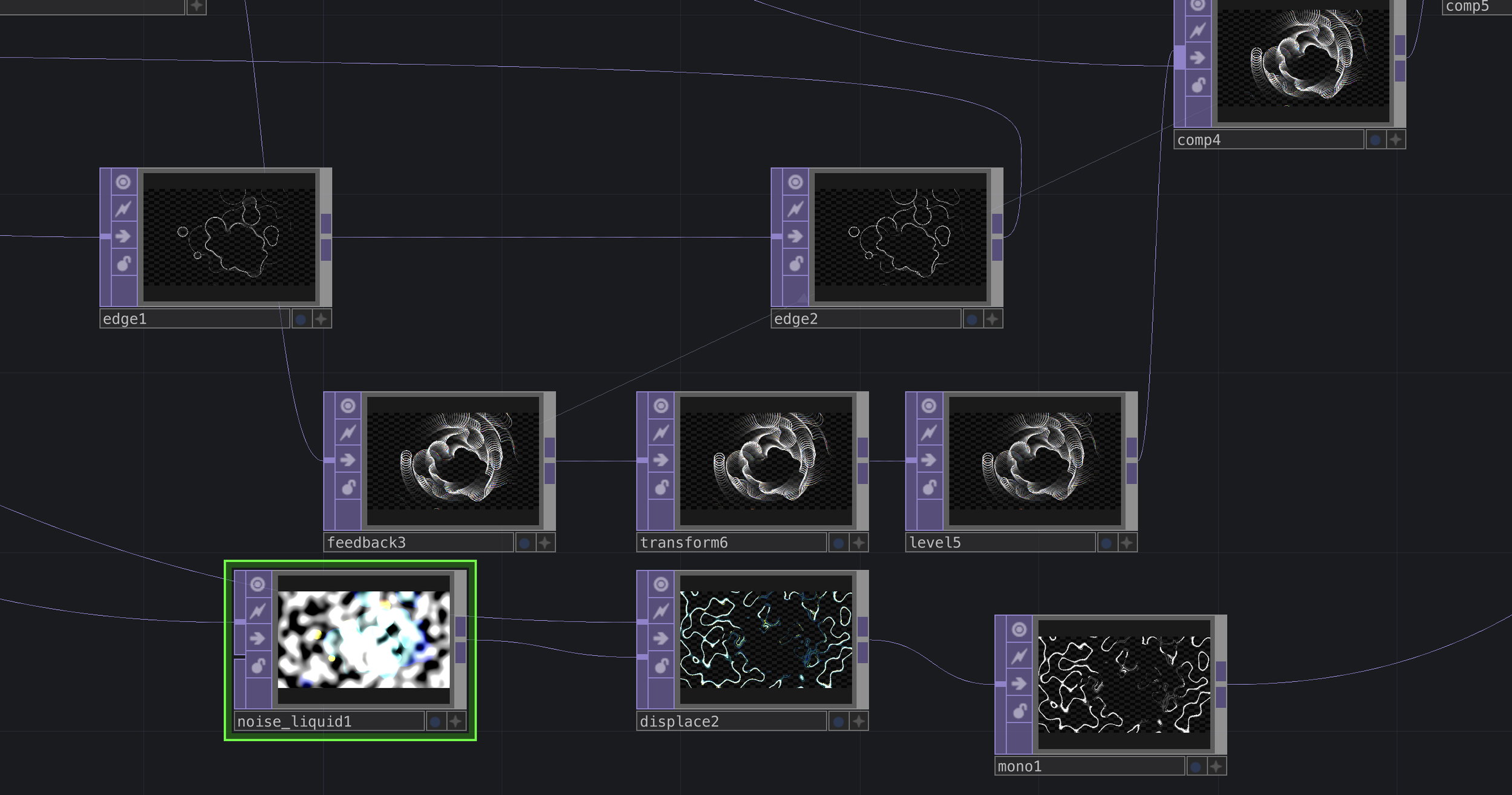
Built in TouchDesigner, Bones uses noise-driven forms to generate irregular, porous structures. The system combines 3D geometry with 2D noise-based elements, which are composited and processed through edge detection and feedback loops. These operations transform soft, shifting masses into layered contours, branching lines, and spiral-like patterns.
Design and science
I didn’t want to represent bone through a binary distinction between healthy and unhealthy, so I focused on structural variation. Density, openness, and porosity become visual qualities that shift throughout the composition. The result is a form without a fixed anatomy, using generative processes to explore the complexity of what lies beneath the surface.