EQUILIBRIO
Balance, made visible: an interactive piece in TouchDesigner
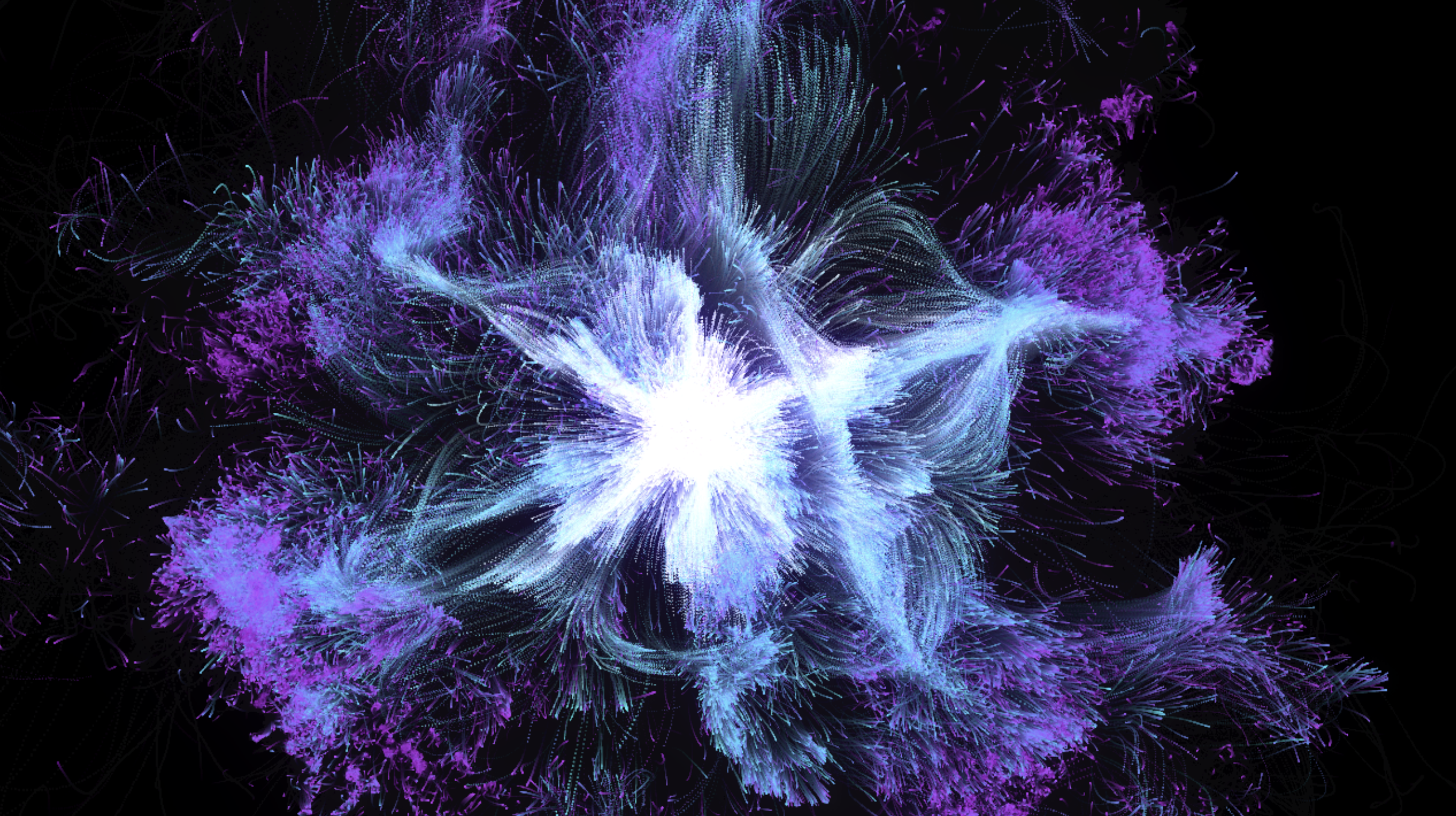
An immersive installation where your own balance shapes a field of glowing particles. Stand on a Wii Balance Board, shift your weight, and the light responds. When you find equilibrium, the flow grows and opens up. When you lose it, it thins out and fades.
Project Contribution
01
REAL-TIME SYSTEM DESIGN IN TOUCHDESIGNER
02
Interaction design with a Wii Balance Board
03
VISUAL AND PARTICLE DESIGN
04
EXHIBITION AND PUBLIC DEPLOYMENT
05
Immersive experience
What is this?
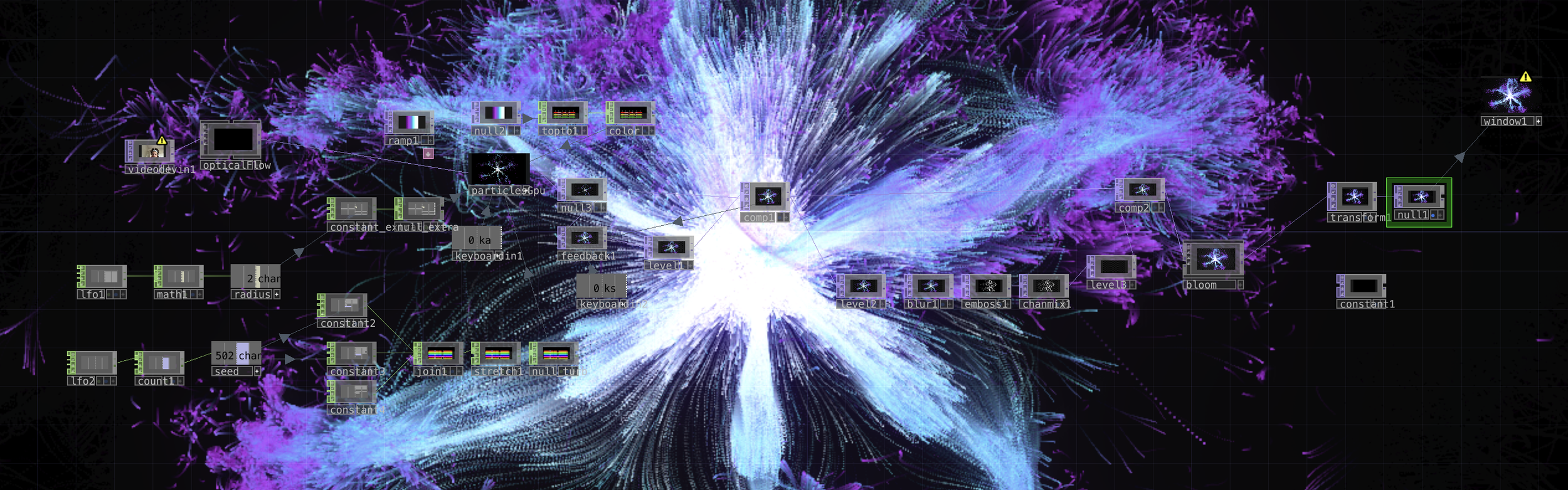
This started as a skill-building exercise. I wanted to understand particle systems in TouchDesigner from a forces perspective, so I built the network node by node: a GPU particle system shaped by turbulence, radial behavior, and stretched data streams that give the particles long, hair-like trails. Feedback, blur, emboss, and bloom turn the points into something closer to living light than geometry.
At first, the particles reacted to a camera through optical flow, and I showed that version outdoors with a projector. People moved, the light followed, and it worked. But it also left me with a question: what if the movement meant something? Waving at a screen is fun, but it doesn’t ask anything of you.
Balance does. It’s something we all rely on, and almost nobody thinks about it until it’s gone, and balance training is usually repetitive and easy to skip. So I replaced the camera with a Wii Balance Board and turned the piece into a way of practicing balance without it feeling like an exercise.
Interaction
Design Approach
The experience follows a simple arc: you notice the visual, you approach it, you sustain your balance, and eventually you start to author what you see. There’s no interface to learn and nothing to click. The board reads where your weight sits, and that data drives the particle forces. Steady balance lets the flow grow and brighten, and wobbling breaks it up.
I spent a lot of time tuning that relationship. If the response is too literal, it feels like a mirror. If it’s too loose, people stop believing they’re the cause. The goal was a middle ground where the system feels alive but still readable as a response to you. LFOs add a slow pulse, so the piece keeps breathing even when you’re still.
The visual is positive by design. It never scolds you for losing balance; it just gets quieter until you come back.
The words on screen
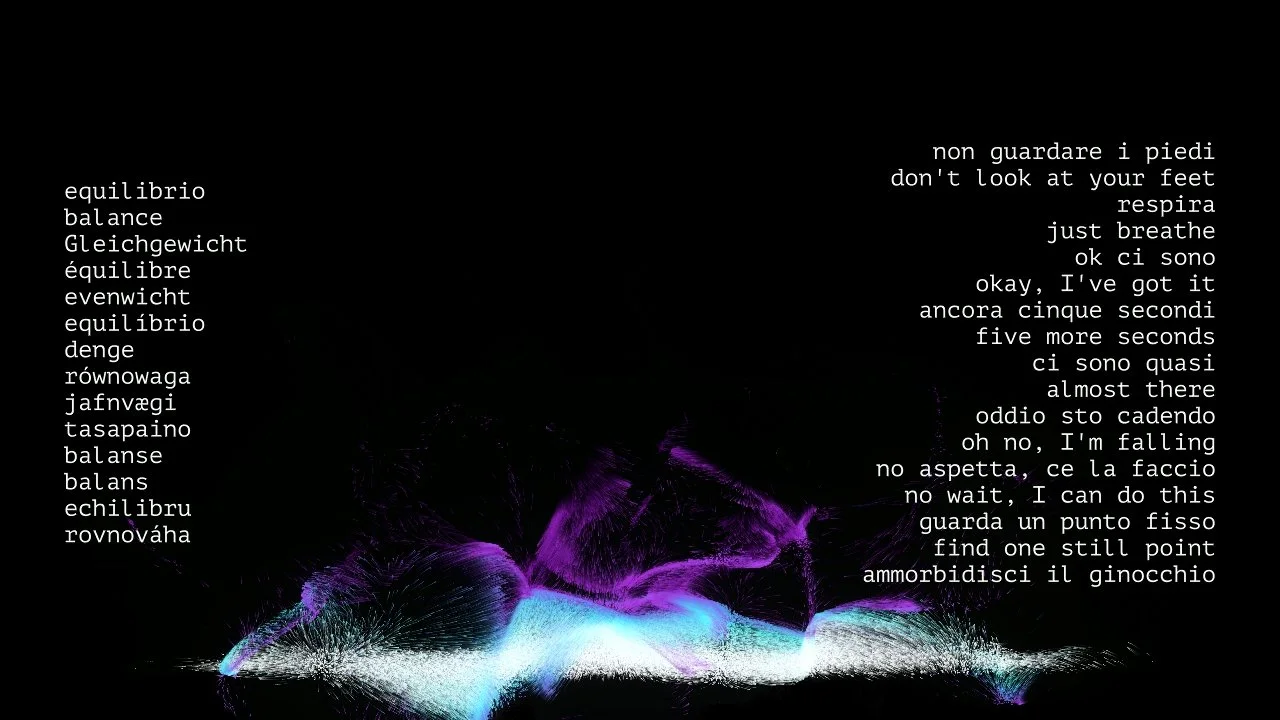
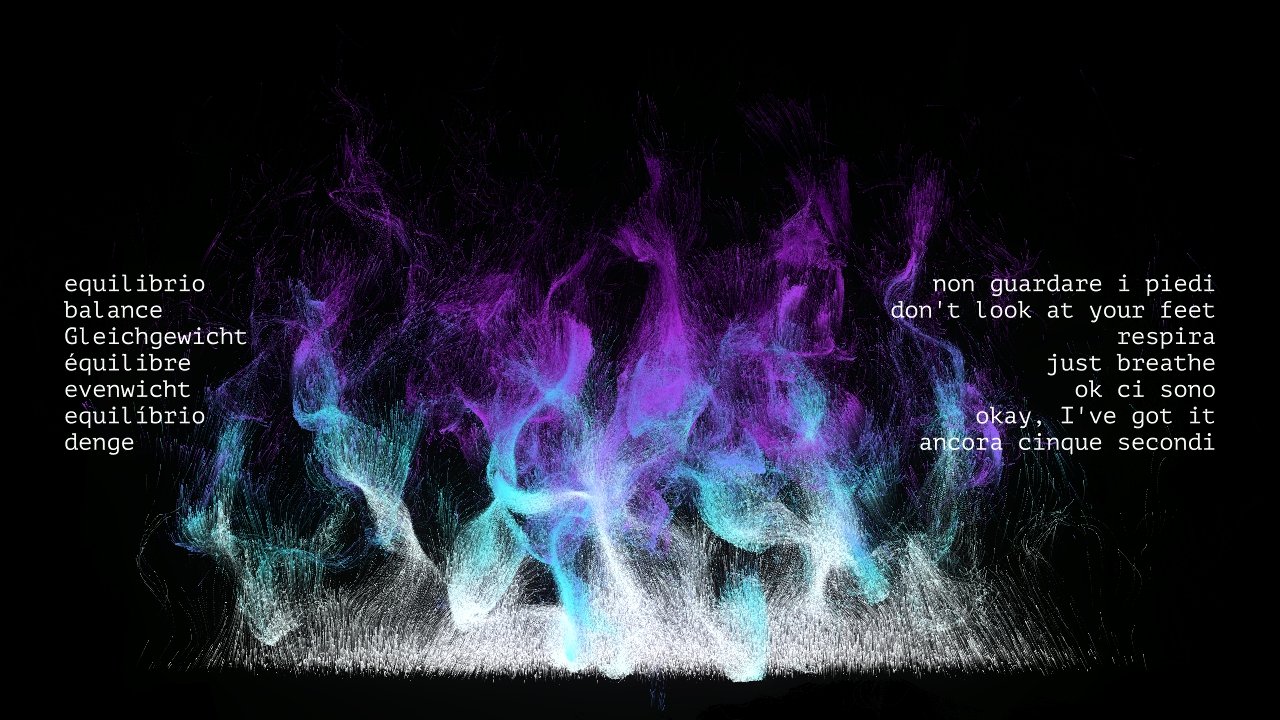
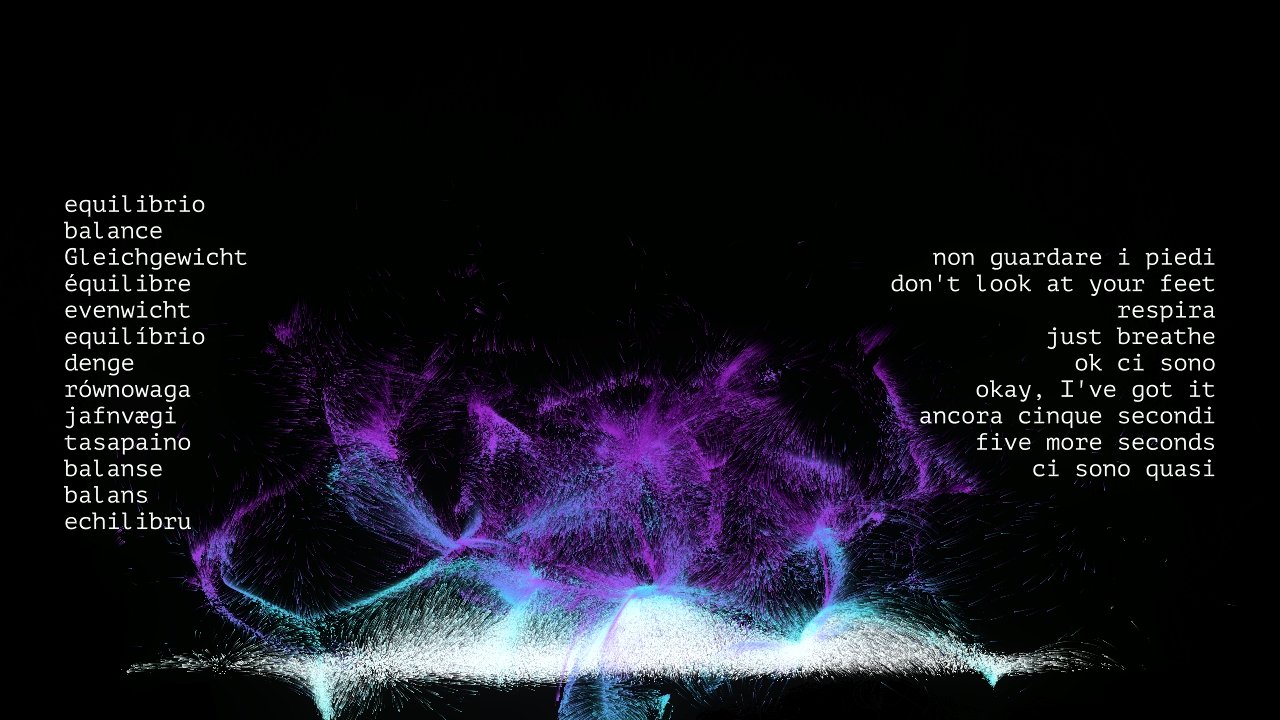
Two columns of text sit on either side of the particles. On the left, the word equilibrio repeats in more than a dozen languages, because every culture has its own name for balance. On the right are my own thoughts from testing the piece on the board, in Italian and English, the way they actually came: don’t look at your feet, just breathe, oh no, I’m falling, no wait, I can do this. They’re the little voice that shows up when you’re trying to stay steady, and I wanted visitors to see that it’s normal to doubt yourself and keep going.
Light instead of numbers
Equilibrium explores how gamification principles can work inside interactive art to motivate balance practice. Balance training matters for almost everyone, but it’s repetitive and easy to skip. Here, the reward isn’t a score. It’s the visual itself, which grows and brightens as you find your equilibrium and quiets down when you lose it.
My interest is in making this kind of fitness feel more accessible and more inviting, especially for people who wouldn’t pick up a standard exercise routine.