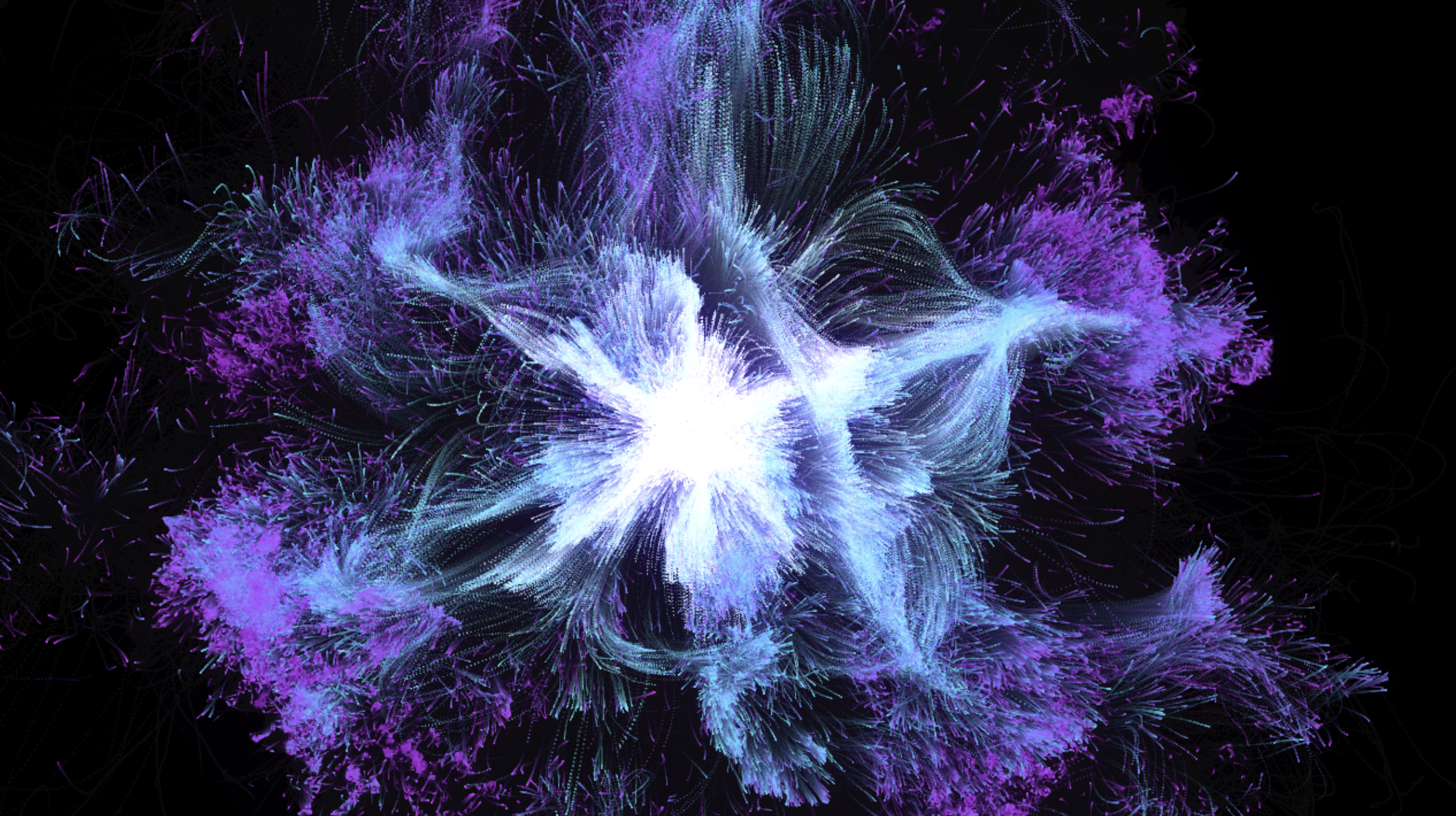
Particle Study: Reactive flow
TouchDesigner experiment in GPU particles and camera-driven motion
A self-directed study in building particle systems in TouchDesigner, then making them respond to the body. A live camera feed is read through optical flow, and that movement pushes, bends, and scatters thousands of glowing particles in real time.
Project Contribution
01
REAL-TIME SYSTEM DESIGN IN TOUCHDESIGNER
02
INTERACTION AND MOTION MAPPING
03
VISUAL AND PARTICLE DESIGN
04
EXHIBITION AND PUBLIC DEPLOYMENT
05
Immersive experience
What is this?
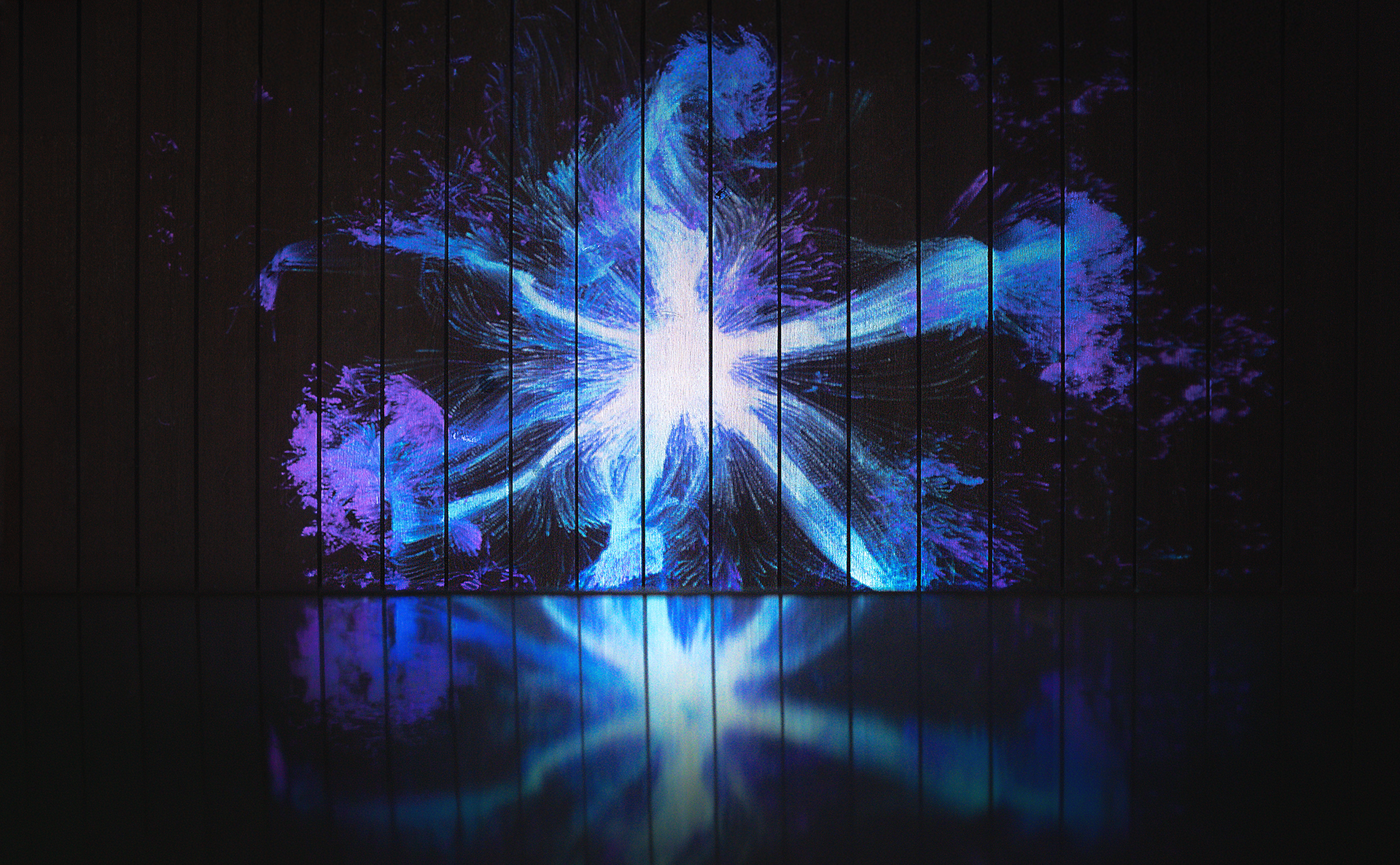
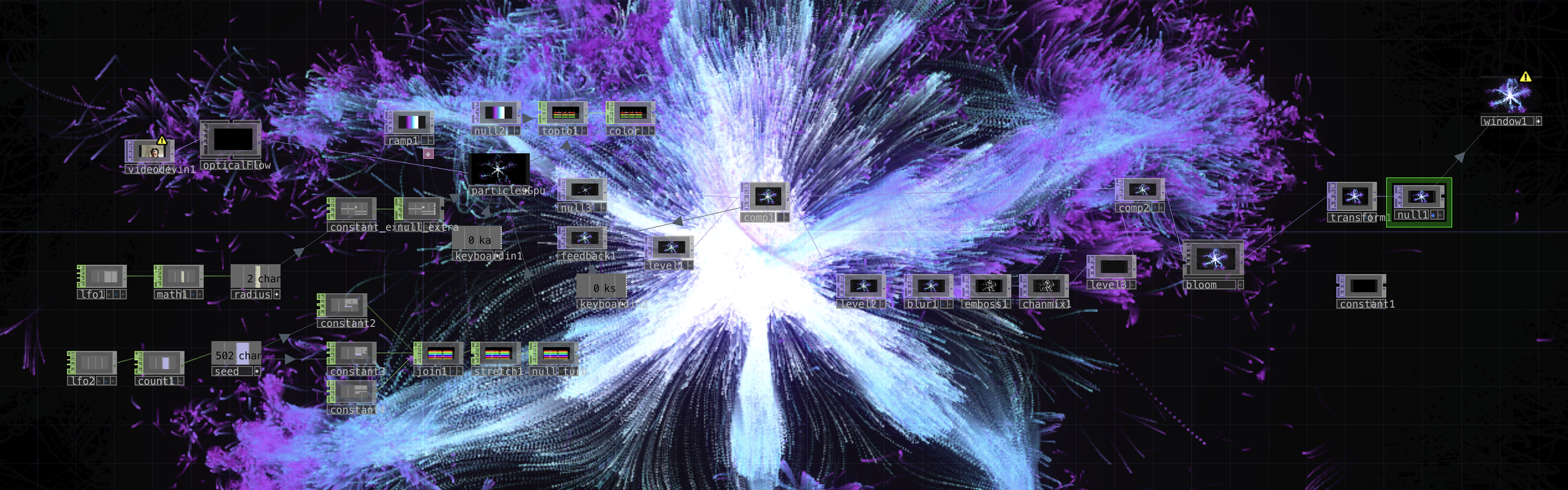
This project started as a skill-building exercise. I wanted to understand particle systems in TouchDesigner from a forces perspective, so I built the network node by node. At its core is a GPU particle system shaped by a stack of force inputs: turbulence, radial behavior, and stretched, joined data streams that give the particles long, hair-like trails. Feedback, blur, emboss, and bloom sit on top of that and turn the points into something that reads more like living light than geometry. Once the system behaved the way I wanted on its own, I added a camera input and optical flow analysis so it could react to whoever is standing in front of it. I displayed it outdoors via a projector.
MORE COMING
✳︎
STAY TUNED
✳︎
MORE COMING ✳︎ STAY TUNED ✳︎
Interaction
Design Approach
I wanted the interaction to feel physical without asking anything of the person. There's no interface to learn and nothing to click. Optical flow reads the direction and speed of movement in the camera image and feeds that into the particle forces, so a slow gesture drifts the particles and a fast one throws them outward. That means the visual output is always a kind of trace of the person's own motion, exaggerated and slightly delayed by the feedback. I spent a lot of time tuning that relationship, because if the response is too literal, it feels like a mirror, and if it's too loose, people stop believing they're the cause. The goal was a middle ground where the system feels alive but still readable as a response to you. I also added LFOs to create a pulsing force so the system itself feels alive.
Learn by making
This study treated making as a mode of inquiry. Building and tuning the system produced tacit knowledge about how parameters shape interactive behavior, the kind of understanding that comes from practice rather than instruction.