MY VOICE
Inclusive Communication UX/UI Design
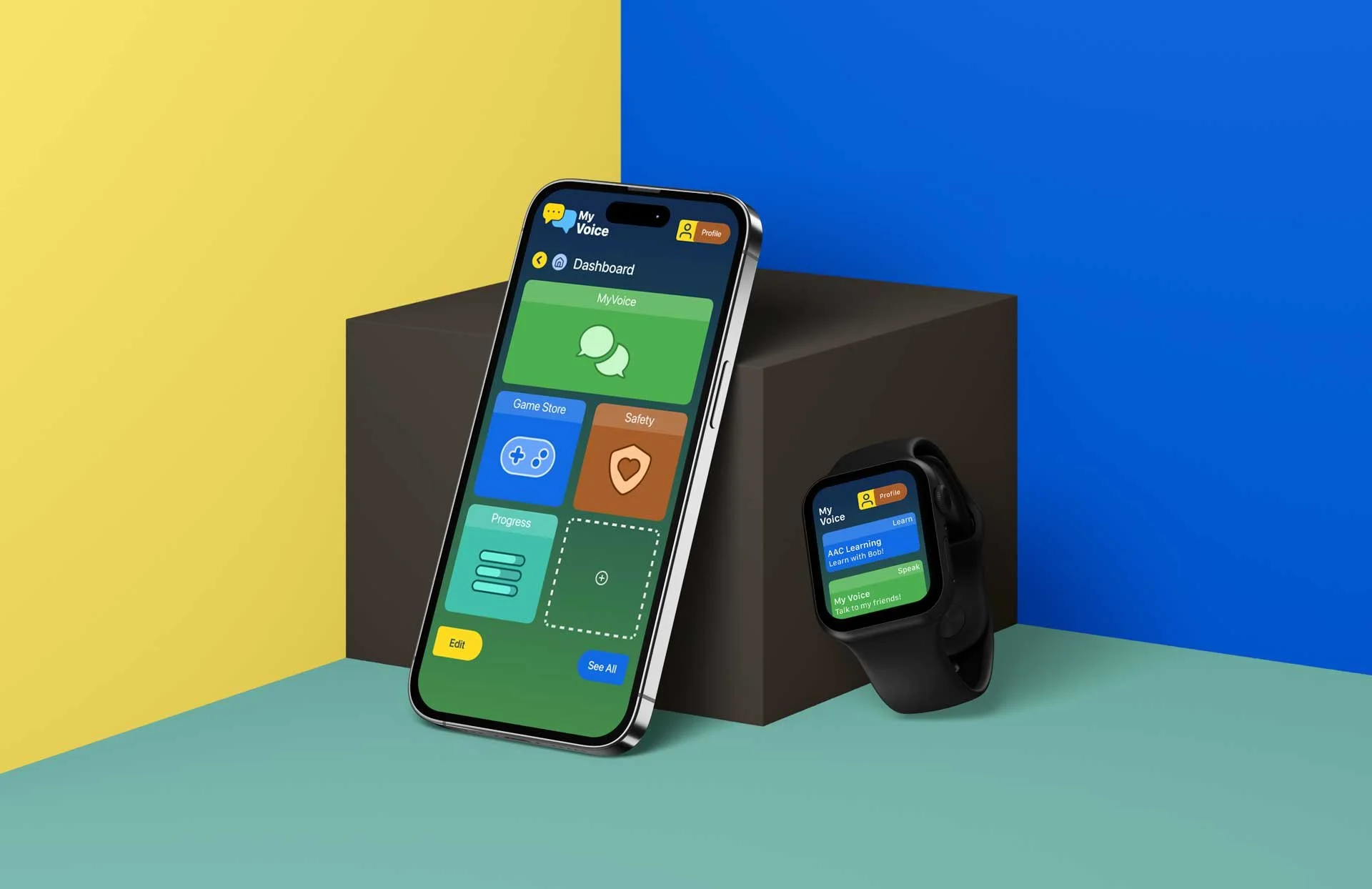
MyVoice began as part of my thesis research into Augmentative and Alternative Communication, reimagining these devices to feel less clinical and more engaging for children. With input from caregivers and educators, I expanded a smartwatch concept into a caregiver app, guided by the CREATE and Octalysis UX frameworks.
Project Contribution
01
UX research and synthesis
02
Interaction design across smartwatch and mobile
03
Visual design system and UI
04
Prototyping and usability testing
05
Concept development and storytelling
Context &
Design Challenge
Many AAC tools prioritize functionality, but often at the cost of emotional engagement and visual warmth. Through research and conversations with caregivers and educators, I noticed a recurring tension: children need tools that support independence and self-expression, while adults need structure, clarity, and control.
MyVoice sits within this tension. The goal was not to simplify communication, but to support it in a way that feels natural, empowering, and appropriate for a child’s daily environment, especially in classroom and home settings.
Why a Smartwatch?
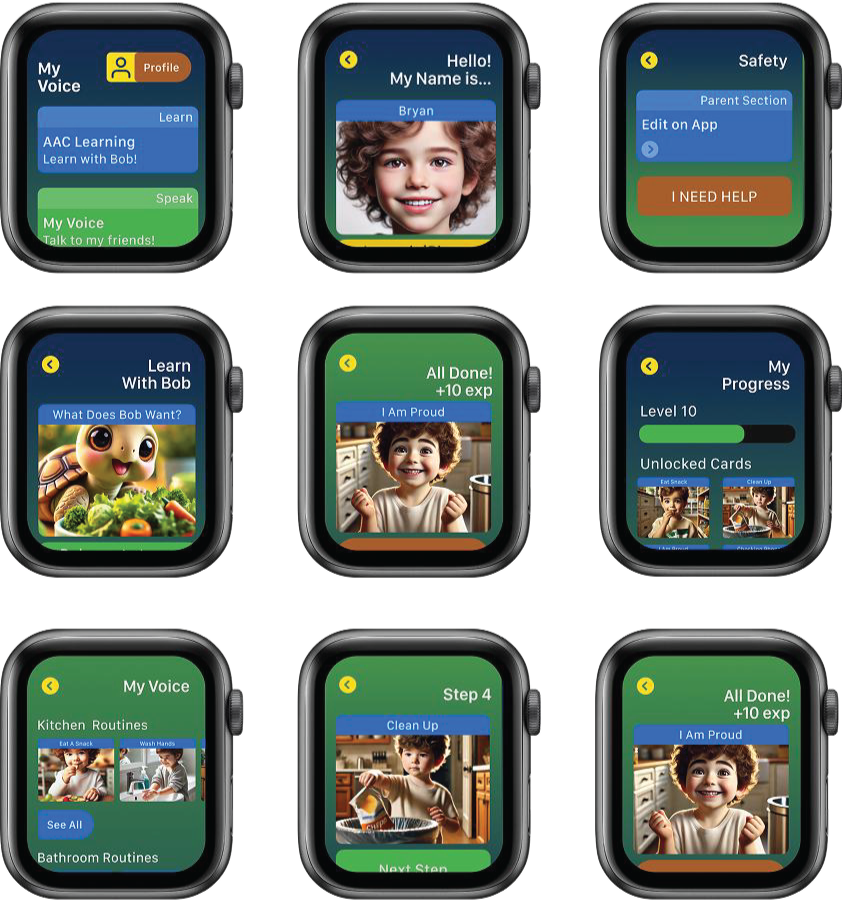
The smartwatch was chosen as a primary interface because it is lightweight, always accessible, and less disruptive than a phone in shared environments like classrooms. On the watch, interactions are intentionally limited and focused, prioritizing clarity, routine, and ease of use for the child.
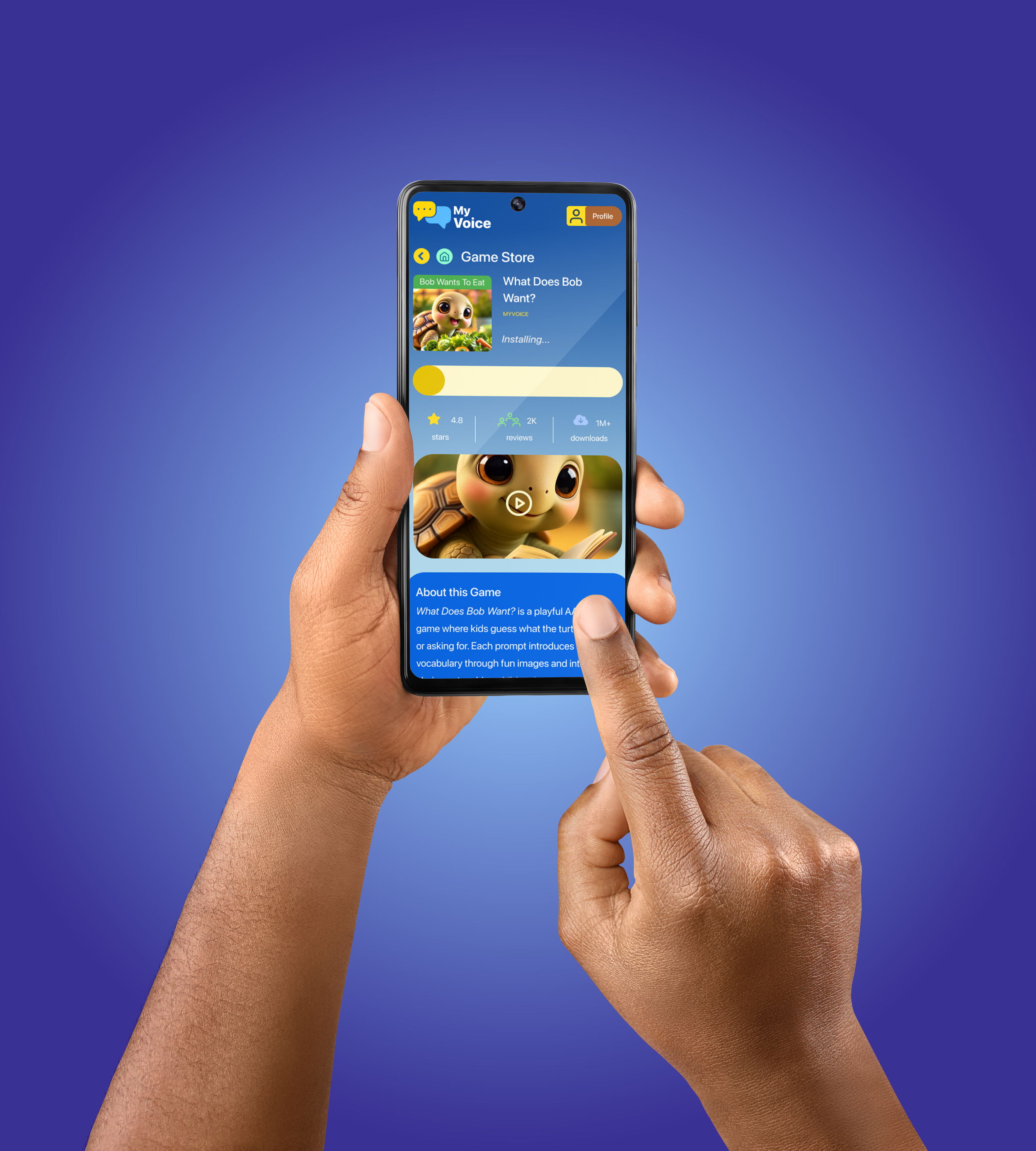
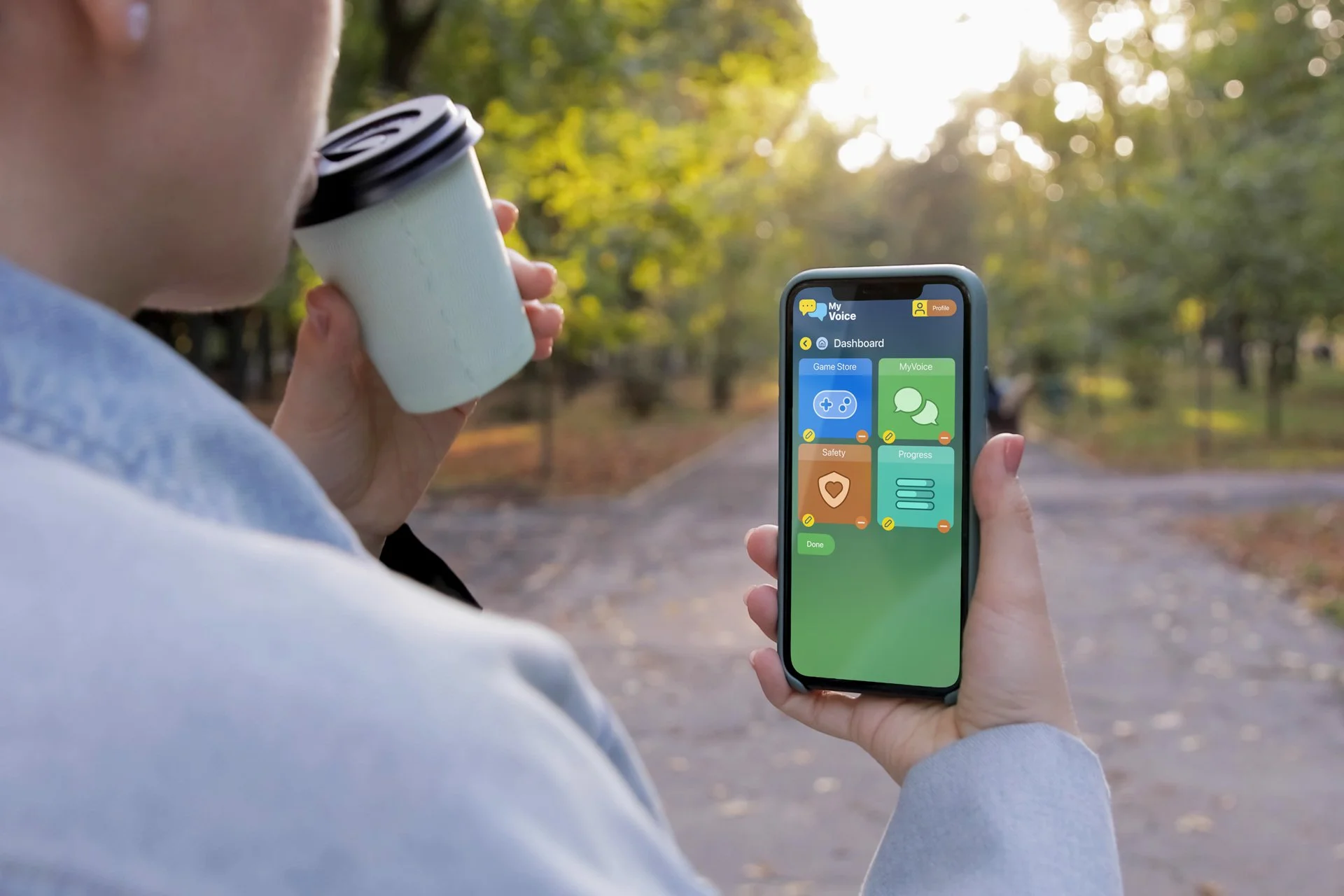
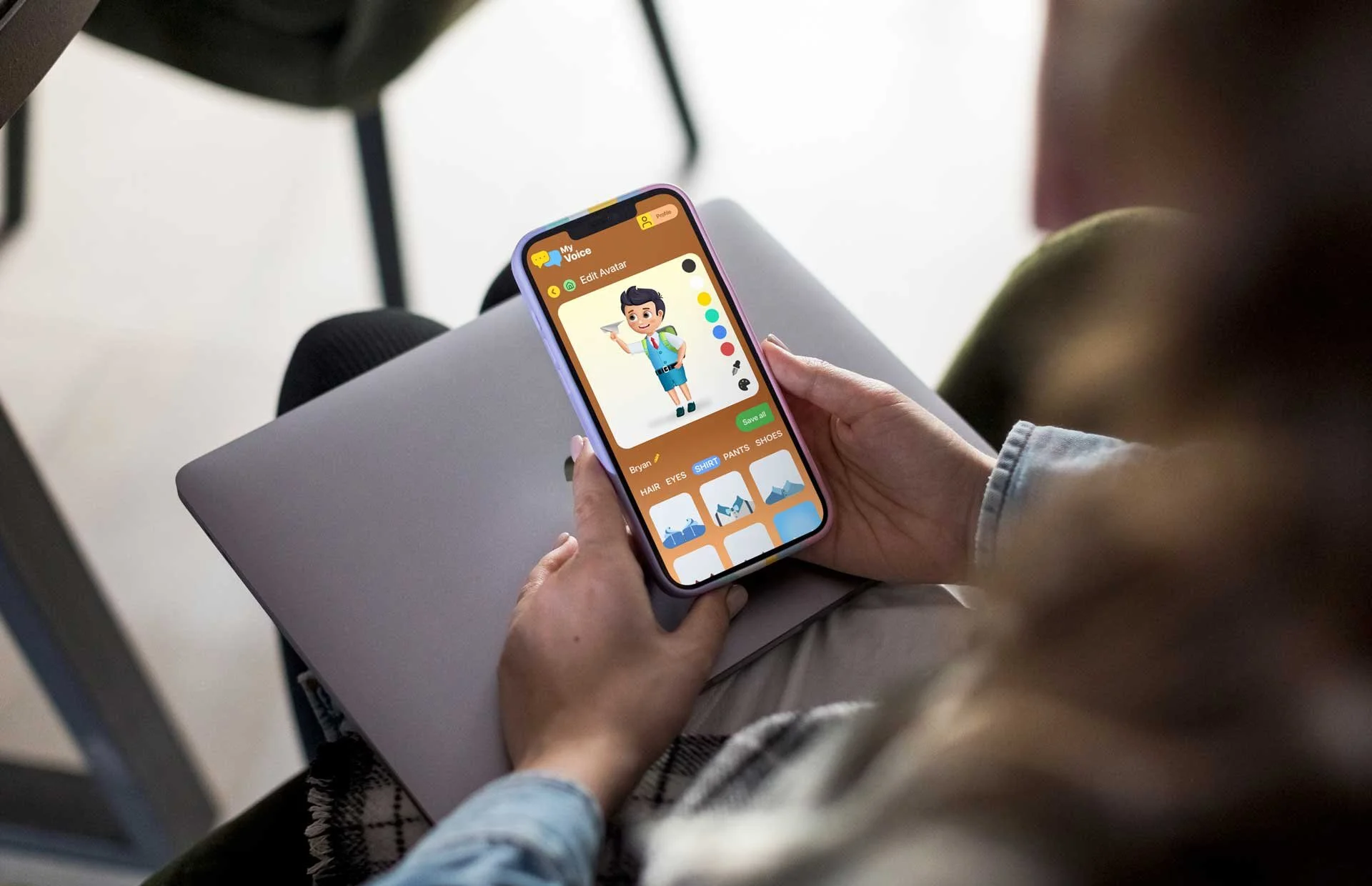
More complex actions such as customization, content creation, and settings management are handled through the mobile app. This separation reinforces a clear distinction between use (child-facing) and configuration (caregiver- or educator-facing), reducing cognitive load while maintaining flexibility.
Interaction
Design Approach
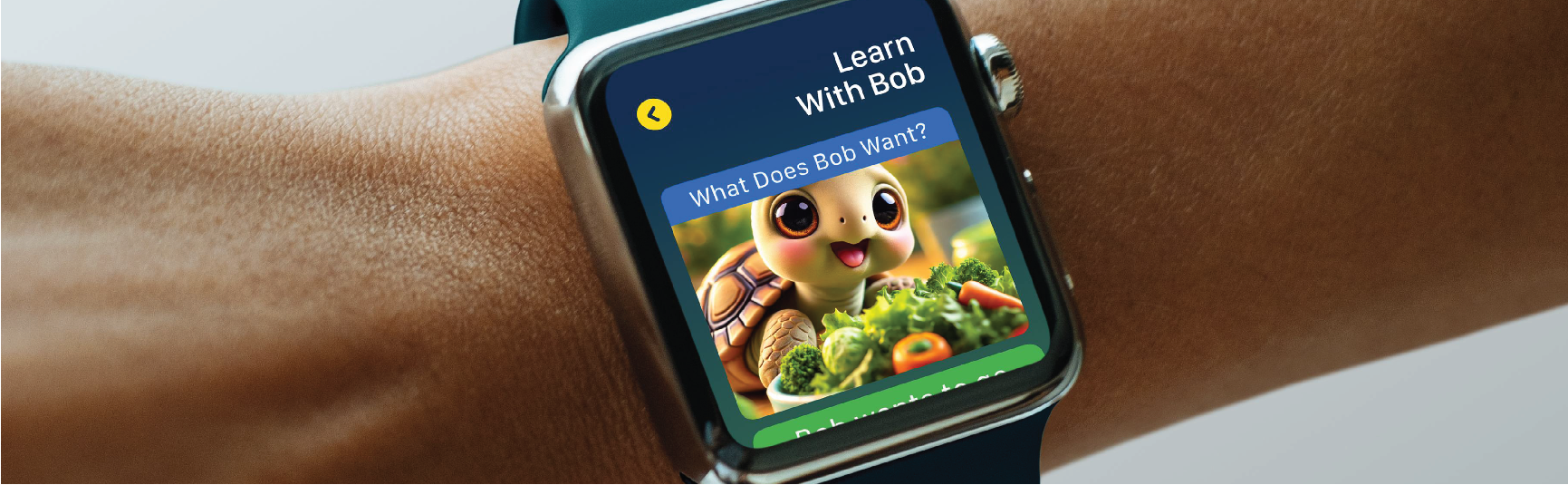
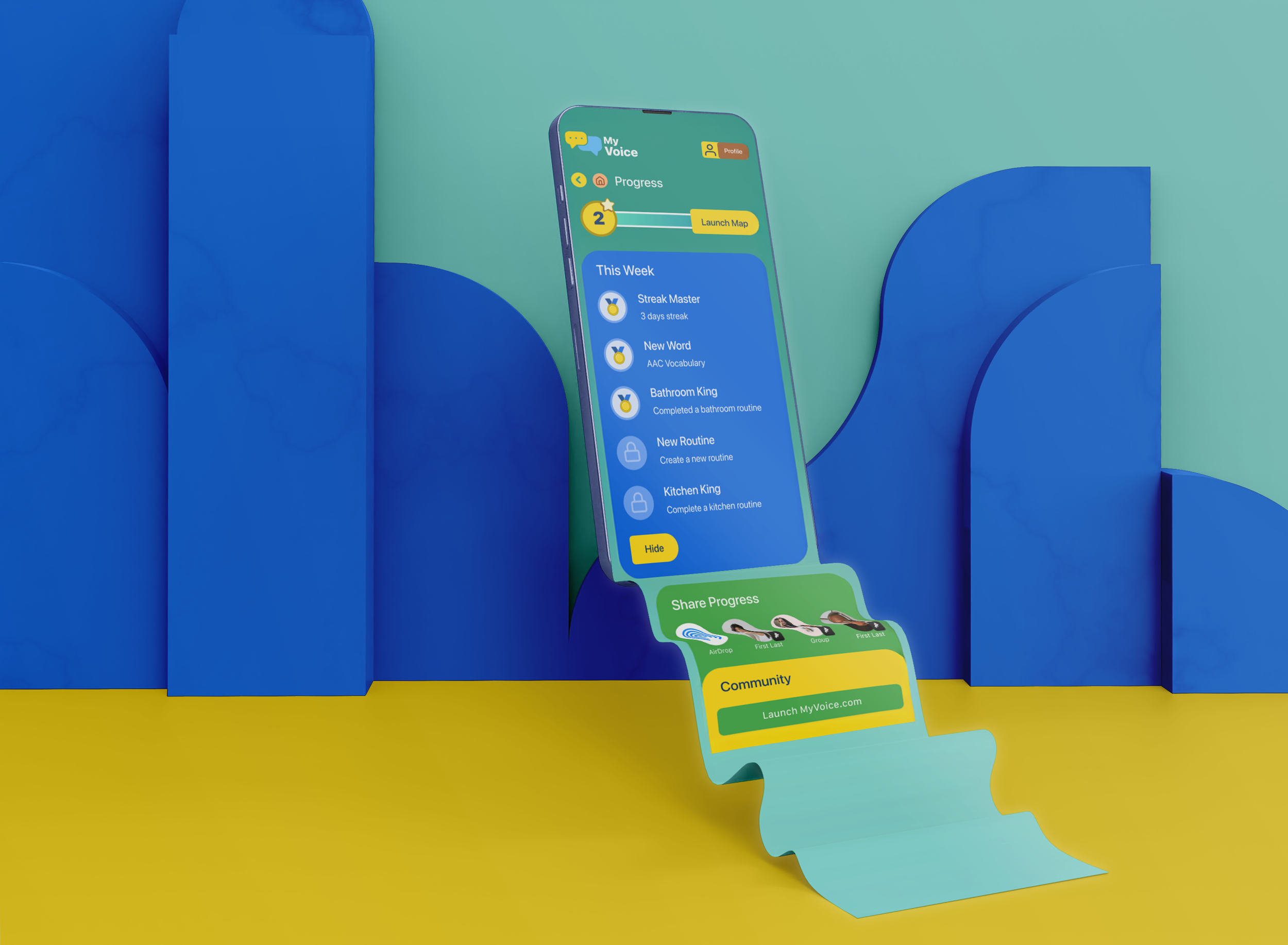
The interaction system emphasizes recognition over recall, using consistent iconography, color-coded functions, and large touch targets. Features such as routine-based prompts, visual feedback, and gentle gamification are designed to encourage engagement without creating distraction or pressure.
Rather than treating communication as a single action, MyVoice frames it as a series of small, supportive moments that can adapt to different contexts, moods, and abilities.
Designing for Inclusion
Inclusion in this project is not only about accessibility, but about representation and dignity. Visual language, character design, and interface tone were carefully considered to avoid medical aesthetics and instead reflect warmth, curiosity, and agency. The system is designed to grow with the child, allowing communication to feel personal rather than prescriptive.